
Noisy wiper blades are a common cause of customer complaints in the auto parts business. While specific return rates for this issue are unclear, overall automotive parts returns r...
More
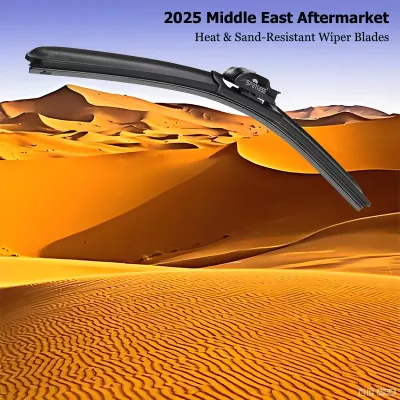
The Middle East doesn’t ask whether aftermarket demand will grow — it asks how fast suppliers can adapt. Vehicle age in the region continues climbing, and extreme climate exposure is compressing replacement cycles. Recent market analysis places the Middle East & Africa at roughly 10% of the global windshield wiper system market in 2025 (source), driven largely by environmental wear rates and expanding fleets.

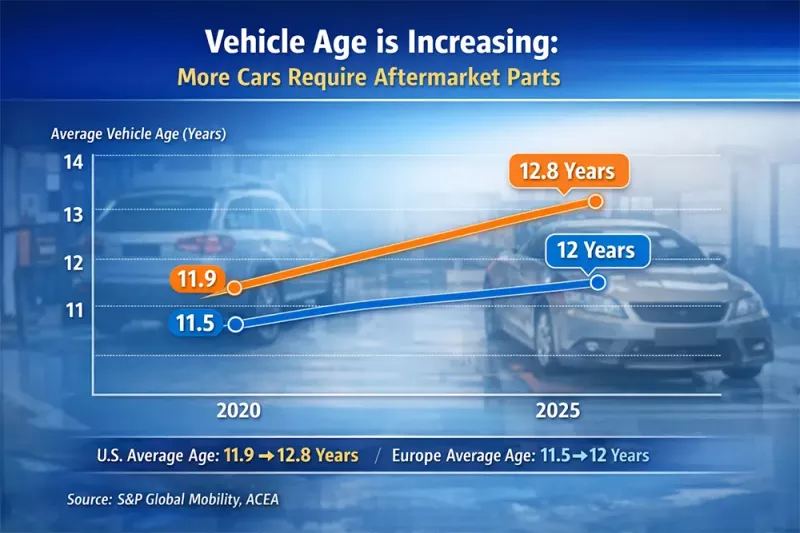
The world’s cars are getting older. According to S&P Global Mobility, the average age of vehicles on U.S. roads has risen to 12.8 years in 2025, marking a historic high. In Europe, ACEA reports an average of around 12 years. This ageing fleet means more vehicles are moving out of warranty and into a segment that requires regular maintenance and parts replacement — a prime opportunity fo...
More
From Overlooked Consumables to Strategic SKU — EVs Are Rewriting the Wiper Blades Market
The global electric vehicle (EV) and hybrid fleet is expanding rapidly. As cabins get quieter, complaints about poor wiping acoustics, unstable pressure, and partial glass contact are becoming more common. What used to be a generic consumable is now a procurement priority for aftermarket retailers, service workshops, and parts distributors. The surge is not only in volume — it is in standards, margin, and SKU specif...
More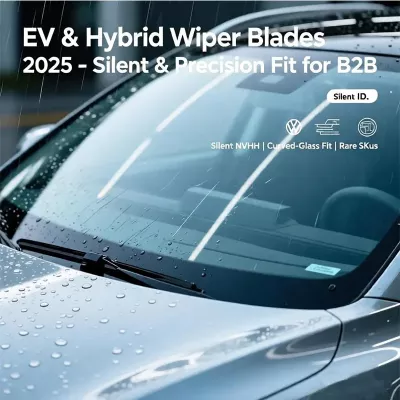
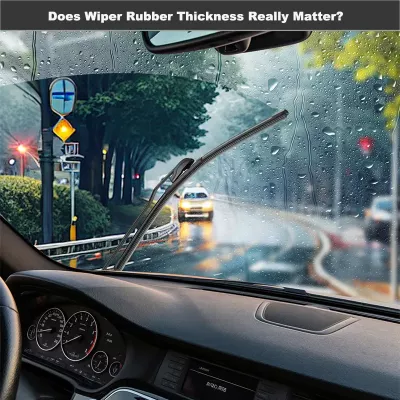
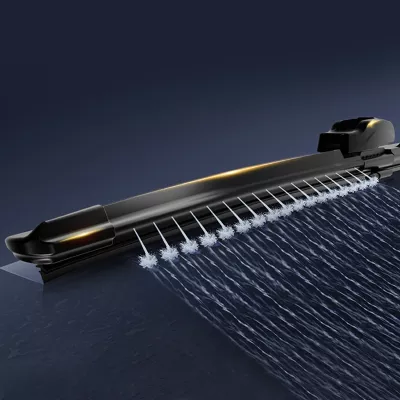
Does Rubber Thickness Really Matter — An Engineering Perspective
When an Australian sourcing engineer raised a question, we decided to share our answer from the engineering side
A Question Worth Answering Properly
Not long ago, a senior sourcing engineer from Australia asked us a deceptively simple question:
“If we want to optimize cost, can we reduce the height of one layer of the wiper rubber? And is wiper noise essentially caused by rubber being too thick?”<...
More