

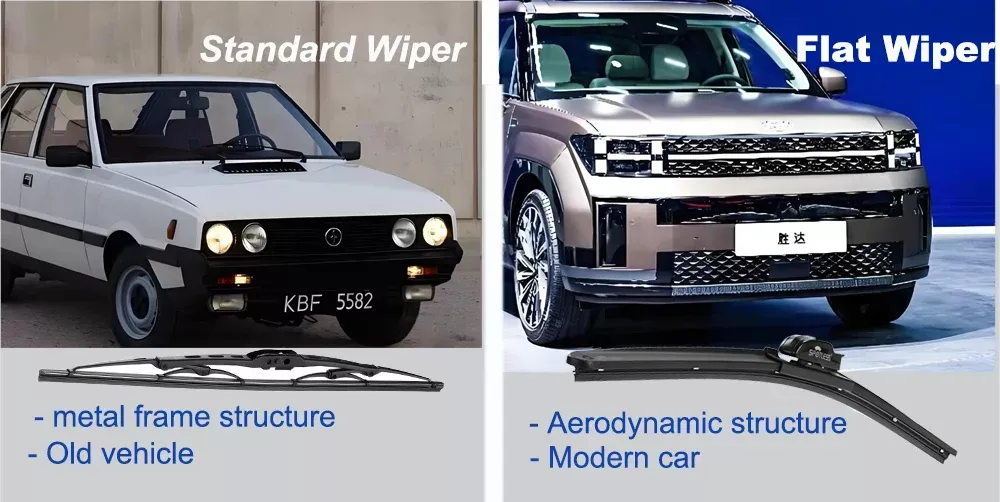
In global automotive aftermarket supply chains, the choice between flat wiper blades and traditional frame wipers is rarely a purely technical decision.
In fact, in many markets, both systems continue to coexist—not because of performance confusion, but due to differences in vehicle age distribution, cost strategy, and OEM specification variation.
This makes the selection process more complex than a simple comparison chart.
👉 Related analysis: OEM vs Aftermarket Wiper Blades
---
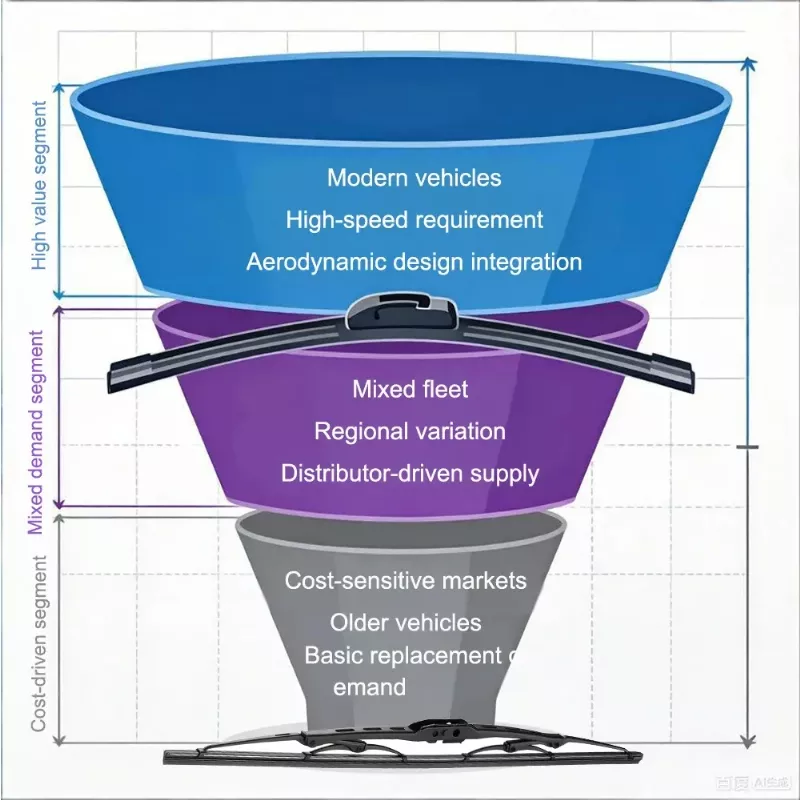
In many regions, especially where vehicle fleets include mixed model years, distributors continue to supply both flat and standard wiper blades.
This is not a temporary transition, but a structural characteristic of the aftermarket.
For example:
Newer vehicles tend to require flat wiper systems
Older vehicles still rely on standard frame designs
Some cost-driven fleets intentionally remain on standard systems
👉 This overlap creates a dual-product reality in supply chains.
Related reading: Beam vs Conventional Wiper Blade Comparison
---
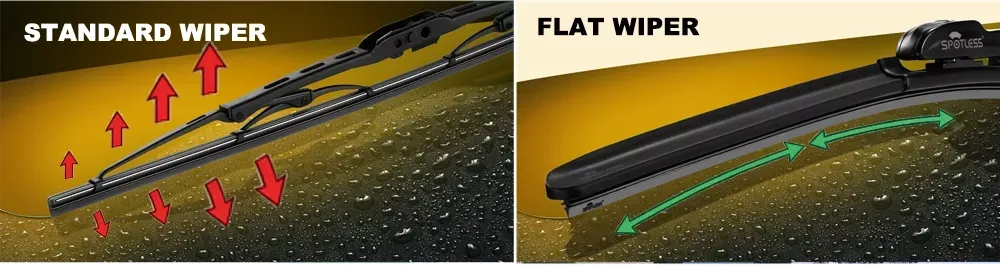
Although flat wiper blades are widely adopted in modern vehicle platforms, replacement is not complete.
One reason is cost sensitivity in certain markets, where the price gap still influences purchasing decisions more than design improvement.
Another reason is that some vehicle platforms were designed around standard frame systems and remain in long lifecycle production cycles.
---
In OEM environments, wiper selection is usually tied to vehicle platform design rather than standalone product preference.
This means:
Some platforms are engineered around flat blade integration
Others maintain standard structures due to cost or legacy design constraints
👉 As a result, OEM adoption is not uniform across all vehicle categories.
OEM capability reference: OEM Wiper Blade Manufacturing Service
---
Most distributors do not choose between flat and standard wipers exclusively.
Instead, they adjust inventory structure based on regional vehicle composition, price sensitivity, and customer segmentation.
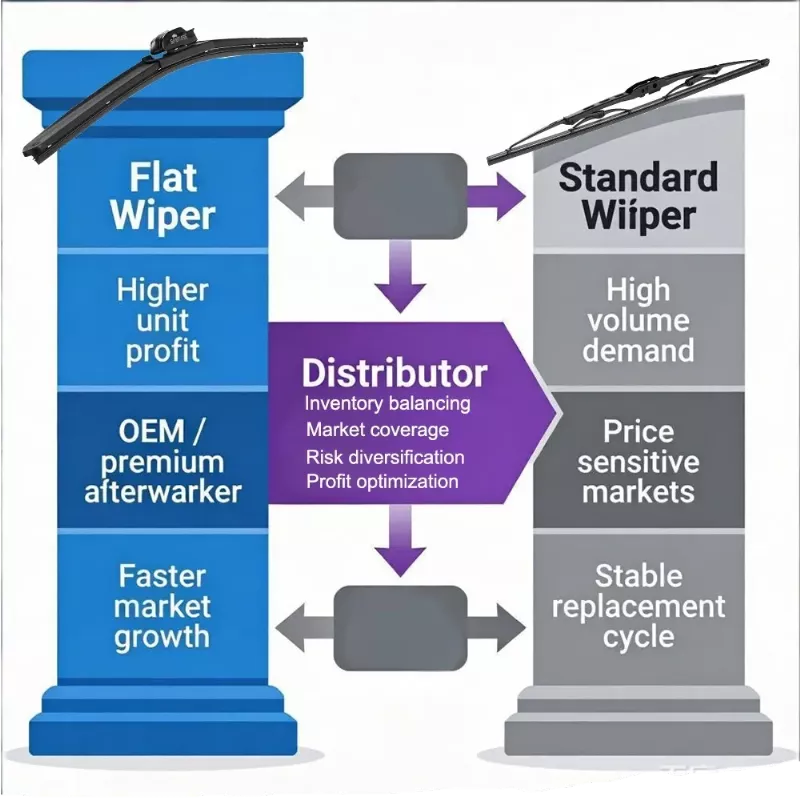
In practice, both product types are often necessary to maintain full market coverage.
---
modern passenger vehicles
higher-speed driving environments
OEM-replacement-oriented segments
Recommended product: OEM Flat Wiper Blades for Modern Vehicles
---
cost-sensitive aftermarket channels
older vehicle populations
Basic fleet maintenance programs
---
In practice, buyers rarely evaluate wipers purely on technical performance.
More often, decisions are influenced by cost structure, vehicle compatibility, market expectations, and replacement frequency strategy.
👉 This is why both systems remain active in parallel markets.
---
From a supply chain perspective, flexibility is often more important than product superiority.
Key factors include:
stable production capacity across both systems
compatibility with multiple vehicle platforms
pricing flexibility for different market tiers
👉 Explore wholesale supply: Contact OEM & Wholesale Wiper Supplier
---
Flat and standard wiper blades are not competing in a strict “better vs worse” relationship.
Instead, they operate within different segments of a fragmented global automotive market.
👉 The real decision is determined by market structure, not technical comparison alone.
If you are sourcing for OEM or wholesale supply: Get Factory Price & OEM Catalog at enquiry@xmyujin.com
Are you facing unstable quality, high return rates, or too many SKUs?
We supply wiper blades and related accessories for distributors and private label brands.
Send us your requirements. We will reply within 24 hours.
Are you facing unstable quality, high return rates, or too many SKUs?
We supply wiper blades and related accessories for distributors and private label brands.
Send us your requirements. We will reply within 24 hours.

OEM wiper blade manufacturer since 2004,
Serving global distributors & private label brands.