


How to Choose the Right Wiper Blades for Different Vehicles
Jun 12, 2026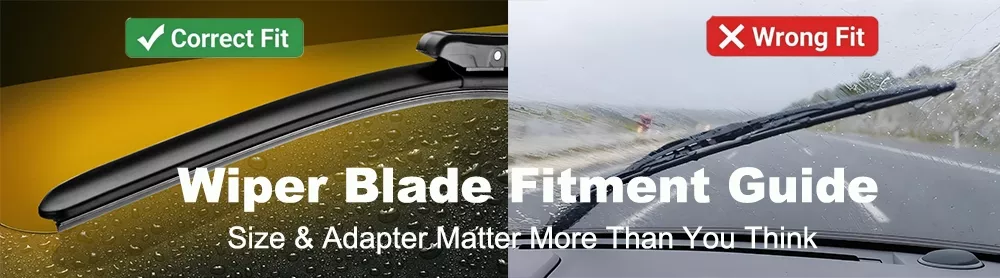
Most Fitment Problems Don’t Come From the Blade
In many cases, when customers tell us “the wiper doesn’t work well”, the first reaction is to question the product quality.
But from what we’ve seen in actual orders, especially bulk shipments, that’s often not the real issue.
It’s the fitment.
Wrong size.
Wrong connector (or adapter).
Or sometimes both.
We’ve had distributors replace an entire batch — only to find the same problem coming back again. That usually tells us the issue started earlier, not at the product level.
The Size Mistake We See Again and Again
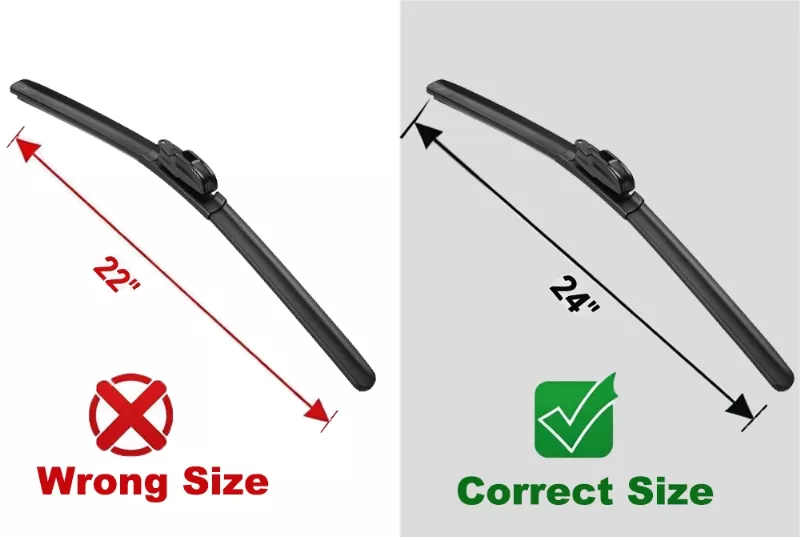
If there’s one mistake we see most often, it’s how the size is determined.
Many customers simply measure the old blade and reorder the same length. It sounds reasonable, but it’s not always reliable.
A few typical cases we’ve run into:
The old blade was already replaced with the wrong size
Left and right blades are actually different, but treated as the same
Measurements taken including the plastic ends, not just the rubber part
In one order we handled last year, a client ordered 20,000 pcs based on previous stock measurements. Nearly 30% had wiping issues — not because of quality, but because the size was slightly off.
That kind of error doesn’t show up immediately. It shows up after installation.
Connector Types (or adapters, as some customers call them)— Where Things Start to Get Complicated
Size is one part. The connector is another.
A lot of people assume most vehicles use the same hook-type arm. And yes, J-hook is common — but far from universal.
We’ve seen issues with:
Push button arms on newer models
Side pin types that require specific adapters
Some European cars with non-standard connectors
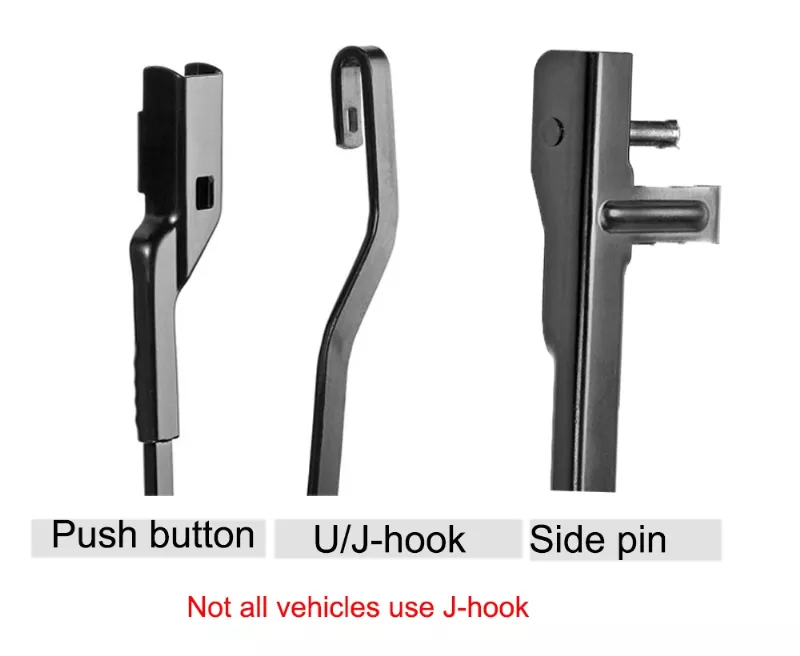
Sometimes the blade itself is fine. The problem is the adapter doesn’t sit tightly enough.
And in bulk orders, even a small mismatch can turn into a large number of complaints.
This is usually the point where things become… messy.
What We Normally Do When Handling Bulk Orders
In practice, we rarely rely on just “size” or “type” descriptions from customers.
What works better is much simpler:
We ask for a vehicle list
In most cases, we prepare a basic fitment reference before confirming the order
Make, model, year — even a rough list helps.
From there, we usually:
Match the correct size combination
Check connector (or adapter) types
Suggest whether a multi-fit solution can cover most models
This step takes a bit more time upfront. But it prevents much bigger issues later.
Especially when the order volume increases.
Multi-Fit Isn’t Perfect — But It Solves a Lot of Problems
We’ll be honest here.
Multi-fit wiper blades are not a perfect solution for every situation.
But in many distributor scenarios, they help reduce complexity.
Instead of managing dozens of SKUs for different connectors, a well-designed multi-fit blade can cover a large portion of vehicles with fewer variations.
We’ve seen customers reduce their SKU count by 30–40% this way.
It doesn’t eliminate all fitment issues — but it makes them more manageable.
A Practical Way to Avoid Most Fitment Issues
There isn’t a single “correct” method that works for everyone.
But from our experience, a few simple steps make a noticeable difference:
Don’t rely only on previous blade sizes
Double-check connector types, especially for newer vehicles
Test a small batch before scaling up
Keep at least one backup adapter option in stock
It’s not a perfect system.
But it avoids most of the avoidable mistakes.
If You’re Not Sure, It’s Better to Double-Check Early
We’ve had customers come to us after running into repeated issues — and in many cases, the solution wasn’t complicated.
It just came a bit late.
If you’re working with multiple vehicle models, especially across different markets, it’s usually worth verifying fitment before placing a full order.
Even a simple vehicle list can save a lot of time later.
If you're not sure about the fitment, you can just send us a vehicle list. We usually help check size and connector details before bulk orders, which helps avoid the most common issues.
📧 Contact us directly: enquiry@xmyujin.com