


Wiper Blade Recycling and Sustainability: What Buyers Should Know
Jul 14, 2026Sustainability is becoming an increasingly discussed topic in the automotive parts industry. However, for professional buyers, sustainability is usually only one part of the purchasing decision.
When sourcing automotive components, distributors and brands still need to consider product quality, supply stability, cost efficiency, compliance requirements and long-term performance.
For wiper blade buyers, understanding recycling possibilities, environmental regulations and manufacturing practices can help make more informed sourcing decisions.
Not Every Buyer Prioritizes Sustainability — And That’s Reality
In the automotive aftermarket, purchasing decisions are rarely based on a single factor.
For many buyers, the key priorities remain:
Consistent product quality
Stable production capacity
Competitive pricing
Reliable delivery
Regulatory compliance
Sustainability has become an important consideration, especially for companies operating in markets with stricter environmental requirements.
However, sustainable auto parts are not only about using environmentally friendly materials. They also involve responsible manufacturing processes, efficient resource usage and products that provide reliable service life.
For automotive component suppliers, the goal is to balance sustainability with practical market requirements.
Can Wiper Blades Actually Be Recycled?
Wiper blade recycling is more complicated than many people expect.
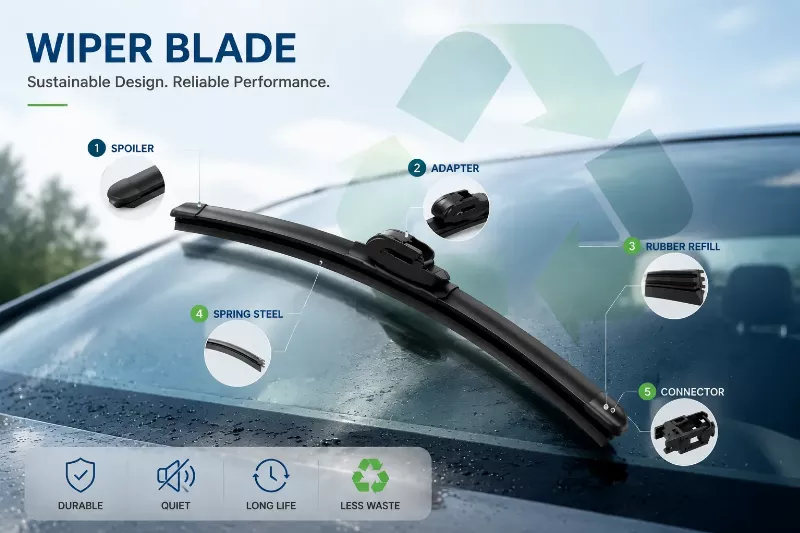
A typical wiper blade contains multiple materials, including:
Rubber compounds
Steel components
Plastic parts
Different types of connectors and adapters
Different wiper blade designs use different material structures and manufacturing processes. BAOYI provides various solutions, including frameless wiper blades for global automotive aftermarket applications.
Because these materials are combined into one product, recycling requires separation processes and suitable collection systems.
The challenge is not simply whether wiper blades can be recycled, but whether an effective recycling process is available in a specific market.
Currently, many automotive aftermarket products focus on improving material efficiency, reducing production waste and extending product lifespan rather than relying only on end-of-life recycling.
Regulations That Actually Matter: REACH and RoHS
For global automotive parts buyers, environmental compliance is often a more practical concern than recycling alone.
REACH Compliance
REACH (Registration, Evaluation, Authorisation and Restriction of Chemicals) is one of the important chemical regulations affecting products supplied to the European market.
For wiper blade manufacturers, REACH compliant wiper blades focus on controlling restricted substances and ensuring that materials meet required chemical safety standards.
BAOYI follows strict material control and quality management procedures to support customers with different market requirements. Learn more about our wiper blade quality control process.
Compliance helps suppliers provide more reliable solutions for distributors and brands selling in regulated markets.
RoHS Requirements
RoHS regulations focus mainly on restricting certain hazardous substances in electrical and electronic products.
While traditional wiper blades are not electronic products, some vehicle-related components and applications may involve additional material requirements depending on market standards and customer specifications.
Professional suppliers should understand different market requirements and provide appropriate compliance documentation when needed.
What Manufacturers Are Doing Today
Modern manufacturers are improving sustainability through practical approaches rather than simply adding environmental labels.
Common improvements include:
Better Material Efficiency
Optimizing material usage helps reduce unnecessary waste during production while maintaining product performance.
Improved Production Management
Efficient manufacturing processes can reduce resource consumption and improve consistency across large-volume production.
More Responsible Packaging Solutions
Many suppliers are exploring recyclable packaging materials and optimized packaging designs to reduce unnecessary consumption.
For eco friendly wiper blades, sustainability is not only about the final product. It also includes how the product is designed, manufactured and delivered.
Durability Is Also Sustainability
When discussing sustainability, product lifespan is often overlooked.
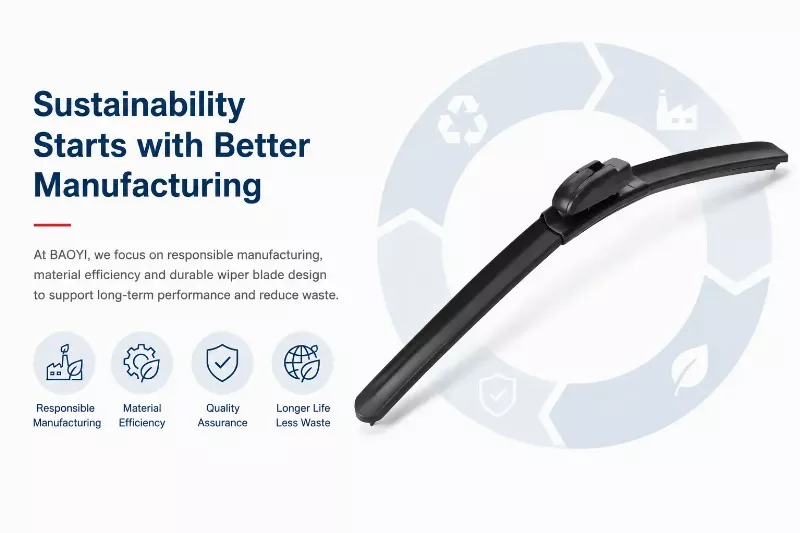
A long lasting wiper blade can reduce replacement frequency and minimize unnecessary material consumption over time.
For automotive buyers, durability provides practical value:
Fewer replacements
Better customer experience
Lower maintenance frequency
More stable product reputation
In many cases, producing reliable products with longer service life is also an important part of sustainable manufacturing.
The Bigger Picture: Sustainability Goes Beyond Recycling
Sustainability in automotive parts is not only about recycling after a product reaches the end of its life.
It also includes:
Responsible material selection
Manufacturing efficiency
Regulatory compliance
Product durability
Long-term supply reliability
For wiper blade manufacturers and buyers, the future of sustainability is about finding the right balance between environmental responsibility and real-world performance.
A reliable supplier should not only provide products, but also understand quality standards, market requirements and the expectations of global customers.
Partner With BAOYI for Reliable Wiper Blade Solutions
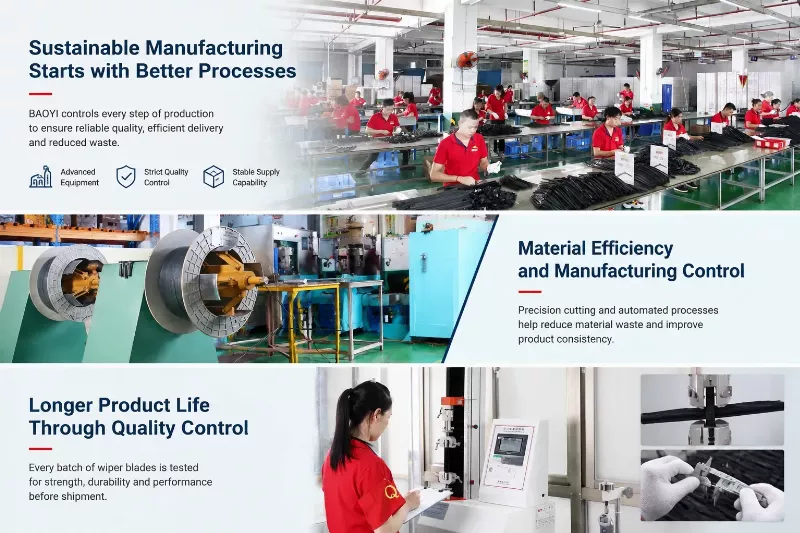
At BAOYI, we focus on producing reliable wiper blade solutions with stable manufacturing processes, quality control systems and OEM/ODM support for global automotive customers.
If you are looking for a reliable wiper blade manufacturing partner or need support with OEM/ODM projects, feel free to contact BAOYI for more information.
OEM | ODM | Wholesale Supply