


How to Soften Wiper Blades Temporary Fix or a Material Quality Problem
Apr 27, 2026If customers frequently search for ways to soften wiper blades, it may signal deeper product quality issues rather than maintenance needs.
Most drivers search for ways to soften wiper blades when they start making noise or leaving streaks. Cleaning, alcohol, or DIY treatments may seem to help at first.
But from an aftermarket and sourcing perspective, a more important question is:
if wiper blades need frequent “restoration”, is the real issue maintenance or material quality?
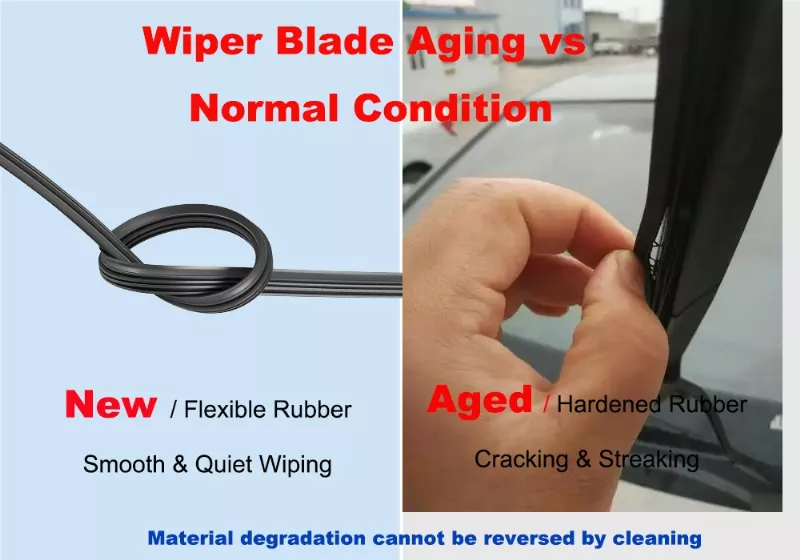
Hardened rubber edges are a common cause of streaking and noise.
Why Wiper Blades Become Hard and Ineffective
Wiper blades are exposed to UV radiation, temperature changes, and airborne contaminants. Over time, these factors break down the rubber compound, reducing flexibility and wiping consistency.
Once elasticity is lost, the blade can no longer maintain even pressure across the windshield. This leads to skipping, noise, and reduced visibility — issues that cleaning alone cannot fully solve.
Why “Softening” Is Only a Temporary Fix
Common methods such as alcohol cleaning, vinegar solutions, or rubber conditioners may improve performance briefly. They remove surface contamination and restore some flexibility — but only on the outer layer.
What they do not fix is internal material degradation.
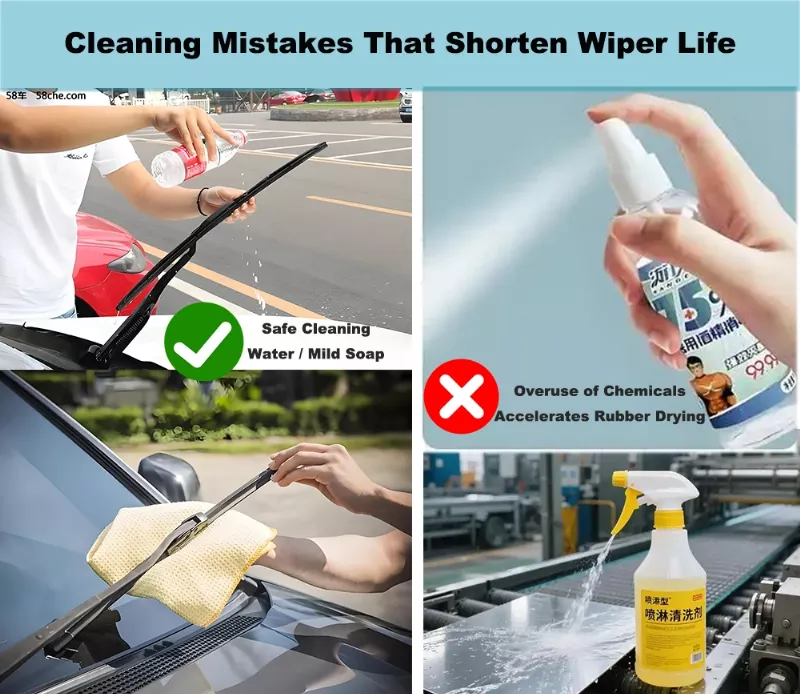
Frequent chemical cleaning can accelerate rubber drying and shorten blade lifespan.
In fact, repeated use of strong cleaners can accelerate drying, making the rubber more brittle over time.
For end users, this creates a cycle of “clean → improve → fail again.” For distributors and workshops, it often translates into repeated complaints and unnecessary replacements.
Material Differences That Buyers Often Overlook
Not all wiper blades respond the same way to aging or cleaning. The difference comes down to material formulation and coating technology.
Basic rubber compounds: More prone to hardening and contamination buildup
Graphite or coated blades: Reduced friction and more stable wiping performance
Silicone-based designs: Better resistance to extreme temperatures and longer service life
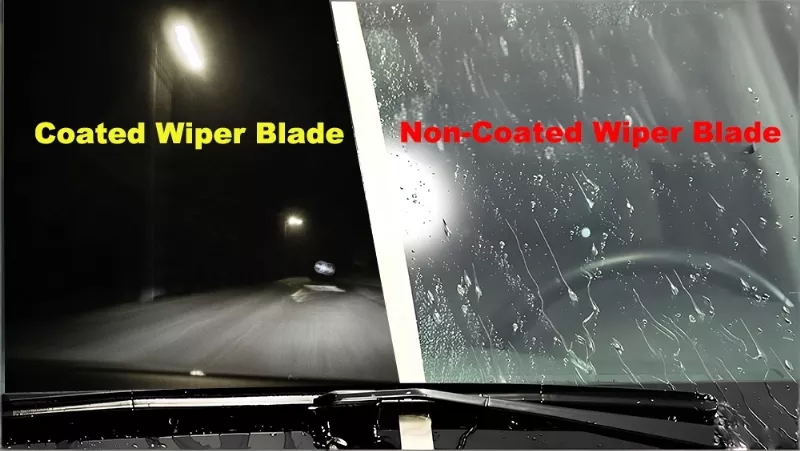
Advanced coatings help reduce friction and extend blade lifespan.
For buyers managing fleets or resale channels, these differences directly impact return rates, customer satisfaction, and long-term product performance.
What This Means for Distributors and Fleet Buyers
If customers frequently search for ways to restore or soften wiper blades, it usually indicates that the product is not delivering stable performance in real conditions.
Instead of relying on maintenance-based solutions, many aftermarket buyers are shifting toward:
More stable rubber compounds
Coated or low-friction blade designs
Consistent manufacturing quality
This shift helps reduce customer complaints, lower replacement frequency, and improve overall satisfaction.
When to Replace Instead of Restore
While cleaning can help in early stages, replacement is the better option when:
Rubber edges feel hard or uneven
Cracks or visible wear appear
Noise and streaking persist after cleaning
In these cases, continuing to “soften” the blade only delays the inevitable and may affect driving safety.
Conclusion: Performance Stability Matters More Than Maintenance
Softening methods can offer short-term improvement, but they do not address the root cause of wiper blade failure.
For aftermarket professionals, focusing on material quality and product consistency is a more effective strategy than relying on repeated maintenance.
Looking to Reduce Returns Caused by Wiper Blade Performance Issues?
We support distributors, importers, and fleet buyers with:
Stable rubber formulations for longer service life
Coated blade options for smoother and quieter wiping
Multi-fit solutions to simplify inventory planning
👉 Explore durable wiper blade solutions for bulk supply
📩 Request catalog & pricing: enquiry@xmyujin.com