

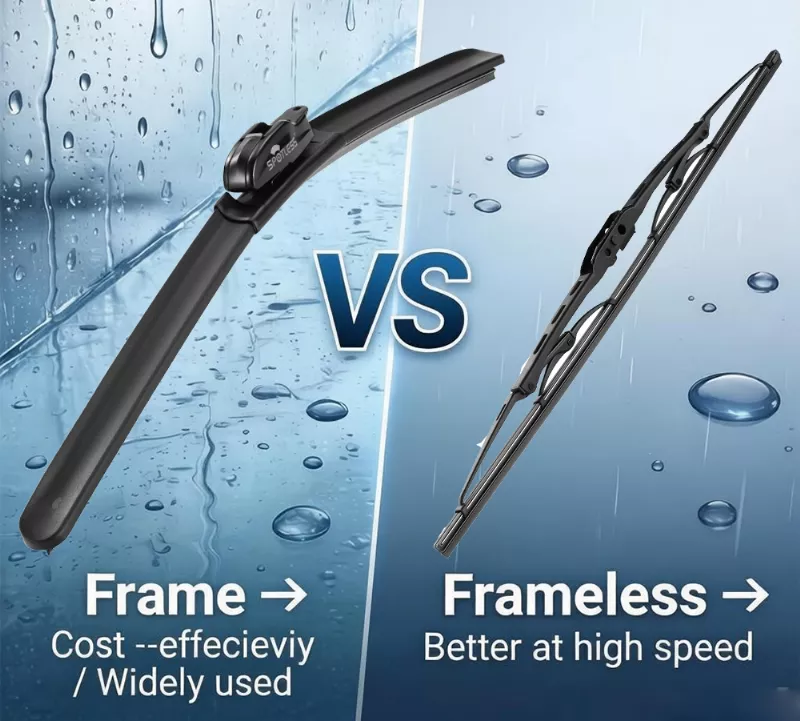
We’ve learned over the years that there really isn’t a one-size-fits-all answer.
Before deciding between frameless and frame blades, it’s important to understand proper sizing and connector fitment. You can refer to our vehicle fitment guide for more details.
Some markets are price-sensitive, others value performance more. And what works in one region might be a minor player in another.
From what we’ve seen in bulk orders, the decision often depends on local vehicle preferences and customer expectations — not just the blade itself.
Industry reports project the global frameless wiper blade market to grow from around $2.6B in 2023 to over $4.2B by 2032, showing strong adoption trends in modern and premium vehicles.
Frameless, or beam-type, blades tend to shine under certain conditions:
High speeds: The flexible structure keeps more consistent contact with the windshield.
Premium vehicles: Sleeker design, often preferred on modern cars.
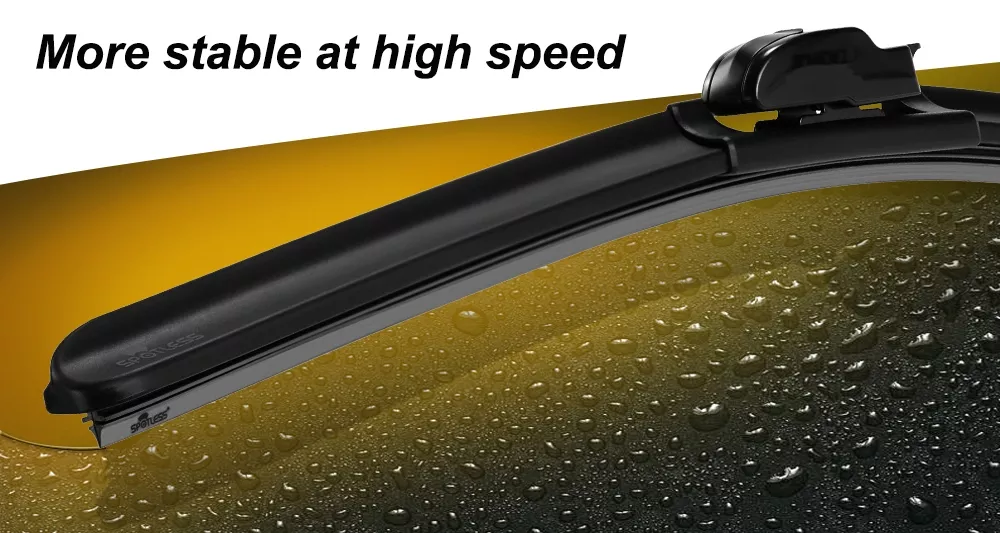
In practice, we’ve noticed that in orders for high-end models or cars sold in regions with long highway stretches, frameless blades significantly reduce complaints about streaking or noise.
For markets focusing on performance, frameless wiper blades are often preferred.
In one bulk order for a European distributor, using frameless blades on multiple models cut fitment-related issues by around 10% compared to standard frame blades.
Cost-sensitive regions still prefer them.
Replacement markets often stock frame blades because they fit a wide variety of vehicles without needing multiple adapters.
From our internal order records, frame blades account for the majority of returns in emerging markets — not because they’re inferior, but because their multi-adapter alternatives are less common and customers are used to simple U/J-hook types.
Our internal data shows that in South-East Asian bulk orders, frame blades covered 85–90% of vehicles without requiring additional adapters.
In cost-sensitive markets, metal frame wiper blades remain a practical choice.
Europe and North America favor frameless on newer cars.
Emerging markets often stick to traditional frames.
Some customers mix both types to manage stock more efficiently.
We’ve also heard feedback from distributors: hybrid or multi-fit blades can reduce complexity but aren’t perfect for all vehicles.
Using well-designed multi-fit blades, some clients reported a 30–40% reduction in SKUs while still covering the majority of vehicle models in their local market.
Hybrid blades combine elements of both frameless and frame designs.
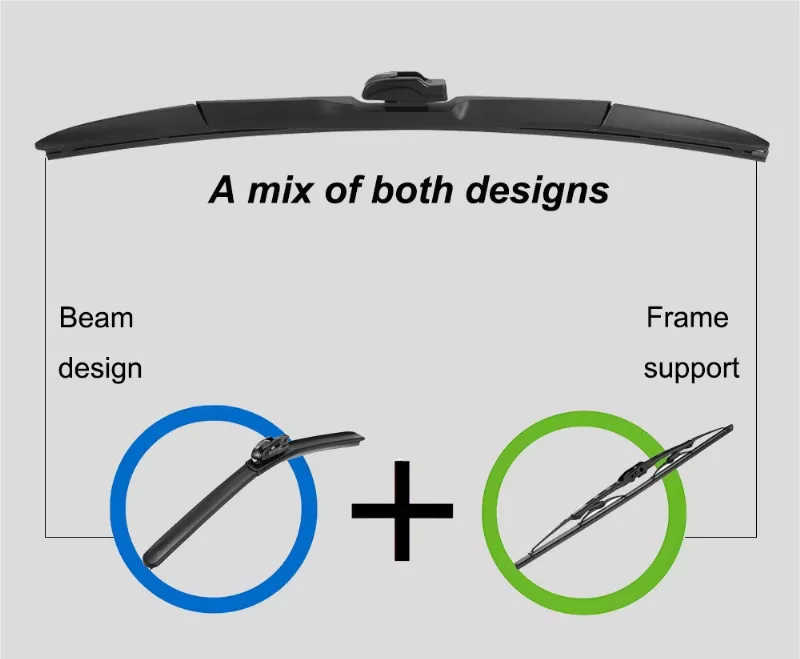
We’ve seen them work in niche scenarios:
Vehicles with uncommon connectors.
Customers managing mid-size fleets with mixed models.
They don’t eliminate all fitment issues but can help streamline inventory when multiple blade types are in demand.
Some distributors also consider hybrid wiper blades for mixed vehicle fleets.
We usually advise clients to test samples before committing to full bulk orders:
Send a small batch to verify performance across your main vehicle segments.
Check for high-speed contact, noise, and connector fit.
Adjust stock based on real-world results.
In our routine pre-production sampling with 50–100 vehicles, roughly 90% passed initial fitment checks. Having one or two backup adapter options can prevent a lot of headaches later.
In many cases, the best choice isn’t decided on paper — it comes from testing in your actual market conditions.
If you’re working with multiple vehicle types or different customer segments, it’s often worth comparing frameless and frame blades side by side before making a bulk decision.
We usually support sample testing for distributors, including basic fitment checks and connector matching based on your vehicle list.
If you’d like to evaluate which option works better for your market, feel free to reach out.
📧 Email: enquiry@xmyujin.com