

We’ve been in the wiper blade business for years, and one question comes up again and again from distributors:
“Why do some wiper blades work perfectly in the city… but start failing once the car hits highway speed?”
In many cases, the answer isn’t the rubber. It’s the spoiler—especially in modern aerodynamic wiper blades designed for high-speed stability.
Most drivers don’t pay attention to it. But for distributors and retailers, this small detail often shows up later—in returns, complaints, and product reviews.
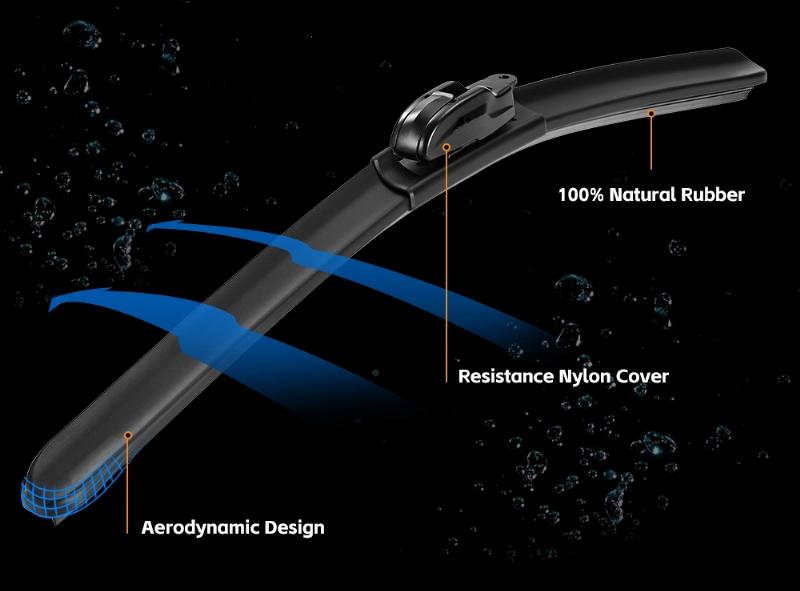
Think about what happens when a car speeds up. Air doesn’t just flow over the windshield—it also gets underneath the wiper blade.
Without anything to control that airflow, the blade can start to lift slightly. Not enough to notice at first, but enough to cause streaks or uneven wiping.
This is where the spoiler comes in.
Instead of letting the air push the blade up, the spoiler redirects it. The airflow is turned into downward pressure, helping the blade stay in contact with the glass—even at speeds around 100–120 km/h.
It’s a simple idea, but in real driving conditions, it makes a noticeable difference—especially in improving high-speed wiper performance.
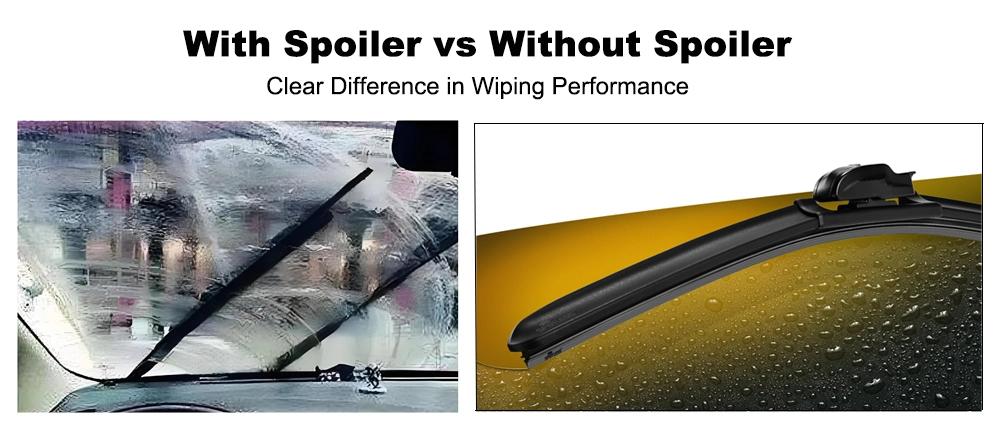
For drivers, the benefit is straightforward: cleaner wiping when it matters most. No streaks, less noise, fewer surprises in heavy rain.
For distributors, the impact shows up somewhere else—your after-sales data.
We’ve seen cases where switching to a better spoiler design reduced return rates significantly. One distributor in Europe told us their complaints dropped within a few months, especially from customers who drive long distances.
The rubber compound didn’t change much. The structure did.
Issues like vibration, skipping, or incomplete wiping are often linked to unstable contact at higher speeds. A properly designed spoiler helps avoid exactly that.
Here’s something many distributors only realize after expanding into multiple markets.
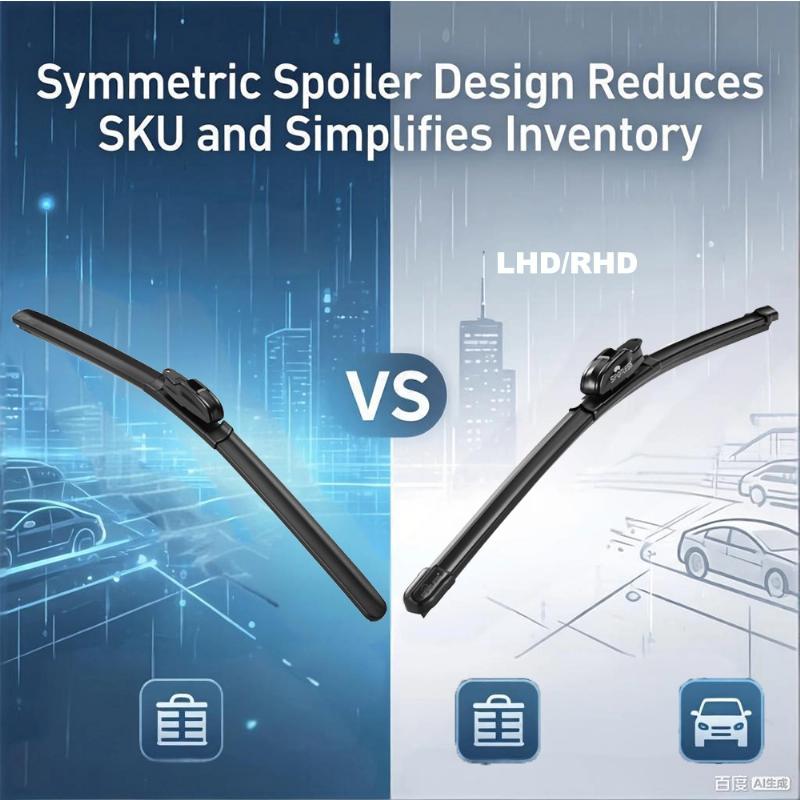
Most spoiler wiper blades are asymmetric. That means they’re designed for one side of the vehicle only.
So if you’re supplying both left-hand drive (LHD) and right-hand drive (RHD) markets—like mainland Europe and the UK—you’re not managing one product, but two.
That usually leads to more SKUs, more stock pressure, and a higher chance of sending the wrong item.
Fewer SKUs to manage
Simpler inventory planning
Lower risk of shipping mistakes
More flexibility across markets
When sourcing from a wiper blade manufacturer, not all spoiler blades are built the same—even if they look similar in photos.
Over the years, we’ve seen products that perform well for months, and others that start failing after a short time. The difference usually comes down to a few key areas.
Material quality. Natural rubber or silicone, proper coatings like graphite or PTFE—these details directly affect durability.
Spoiler attachment. Glue might look fine at first, but it doesn’t always hold up. Mechanical fixing methods like clips or welding tend to be more reliable.
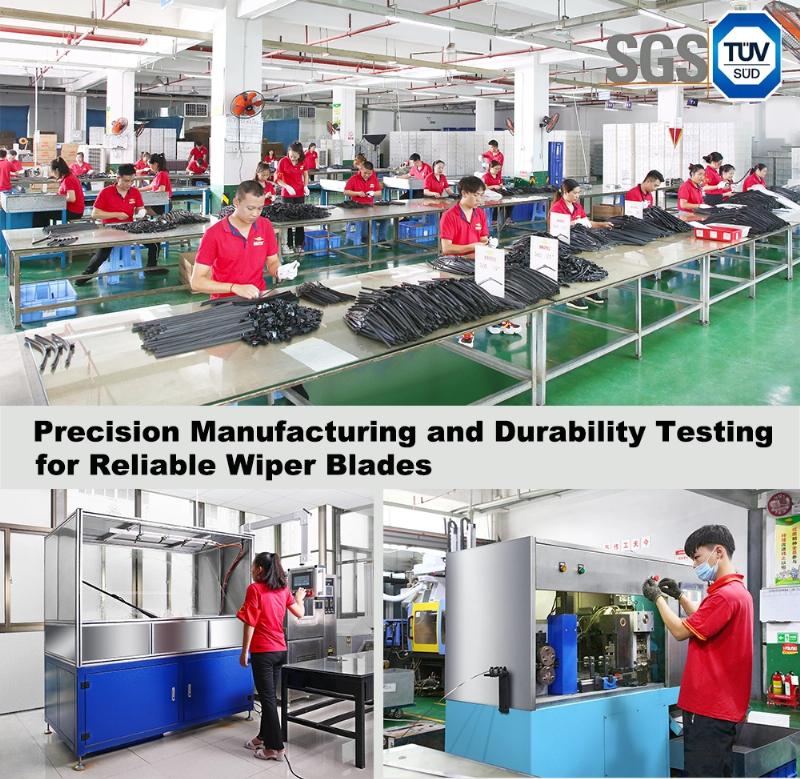
Testing. Long-cycle wiping tests matter. Without them, it’s hard to predict how the blade performs over time.
Certifications. IATF 16949, ISO 9001, and CE, RoHS, Reach are not just labels—they indicate the factory has been audited and meets certain standards.
In addition, manufacturers with ongoing product development usually hold multiple patents. That’s often a sign they’re improving designs rather than just copying them.
For larger orders, it’s also reasonable to expect third-party test reports (SGS, TÜV) and basic traceability.
If you’re selling standard wiper blades, you’ve probably noticed how competitive the market has become.
Price alone is rarely enough to stand out anymore.
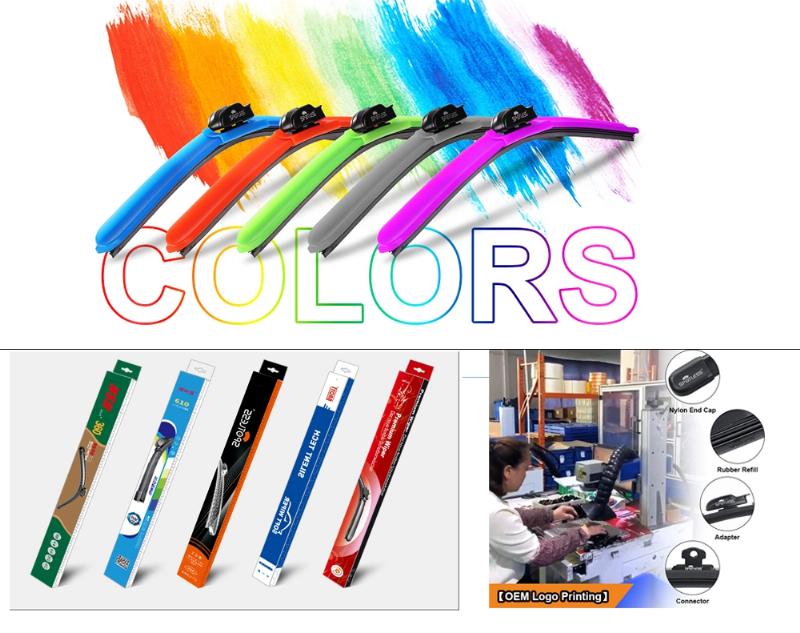
That’s why more distributors are moving toward private label. It gives you more control—not just over pricing, but also how your product is positioned in the market.
We’ve worked with clients who started with small OEM batches and gradually built their own product lines. Over time, their customers began asking for their brand directly, not just “any wiper blade.”
Typical customization options include:
Logo printing on the spoiler or blade body
Custom colors or materials
Retail packaging design
Adapter configurations for different markets
Most projects start with samples. It’s a practical way to test quality before committing to larger volumes.
Spoiler wiper blades aren’t a “premium gimmick.” When designed properly, they solve real-world problems.
Better contact at speed. Fewer complaints. More consistent performance across different driving conditions.
For distributors, the decision is usually about balance—product reliability, inventory efficiency, and long-term customer feedback.
If those are priorities for your business, spoiler design is definitely something worth paying attention to.
If you’re evaluating new suppliers or thinking about expanding your product range, feel free to reach out.
We can arrange sample blades, share product details, and provide quotations based on your target market and expected volume.
📧 Email: enquiry@xmyujin.com
Are you facing unstable quality, high return rates, or too many SKUs?
We supply wiper blades and related accessories for distributors and private label brands.
Send us your requirements. We will reply within 24 hours.
Are you facing unstable quality, high return rates, or too many SKUs?
We supply wiper blades and related accessories for distributors and private label brands.
Send us your requirements. We will reply within 24 hours.

OEM wiper blade manufacturer since 2004,
Serving global distributors & private label brands.