


Why Wiper Blades Start Streaking — What We’ve Seen in Real Orders
May 09, 2026Most wiper streaking problems are not caused by sudden manufacturing defects. In aftermarket distribution, streaking usually appears after real usage time and is commonly related to rubber wear, friction, or fitment conditions.
Many distributors reduce complaint rates by improving coating selection, connector compatibility, and sample testing before scaling bulk orders.
How Distributors Usually Misunderstand Wiper Problems
Here’s something we hear all the time from distributors and aftermarket buyers:
“After a few months, customers say the wiper isn’t cleaning properly.”
Streaks. Noise. Sometimes a bit of skipping.
Sound familiar?
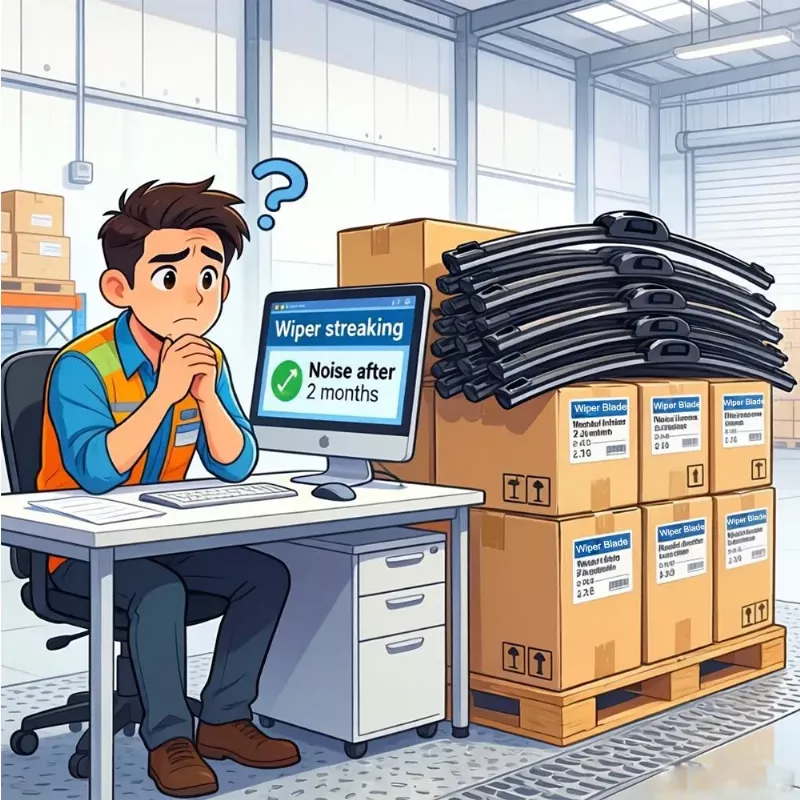
The first reaction is almost always the same — is it a quality issue or a supplier problem?
But from what we’ve seen in bulk orders, especially in aftermarket wiper blade supply, that’s not usually where it starts.
It often shows up after 2–3 months of use, not on day one.
Many distributors dealing with streaking or noisy wipers are also facing other common aftermarket issues, such as skipping, fitment mismatch, or uneven wiping performance.
You can also read our complete guide: Common Wiper Blade Problems (Based on Real Distributor Feedback & Returns)
What Actually Changes After a Few Months of Use
We won’t go too deep into material science here.
But in real windshield wiper blade usage, a few things tend to happen:
The rubber edge slowly hardens
Contact with the windshield becomes less even
Surface wear starts to build up
That’s enough to create streaking or uneven wiping.
In many cases, what looks like “bad quality” is actually early-stage rubber wear.
In some cases, streaking or uneven wiping may also be related to a connector mismatch or improper fitment across vehicle models.
See our multi-fit wiper blade adapter system for aftermarket compatibility reference.
Friction Is the Real Cause of Rubber Wear
One thing we didn’t fully appreciate early on in aftermarket supply:
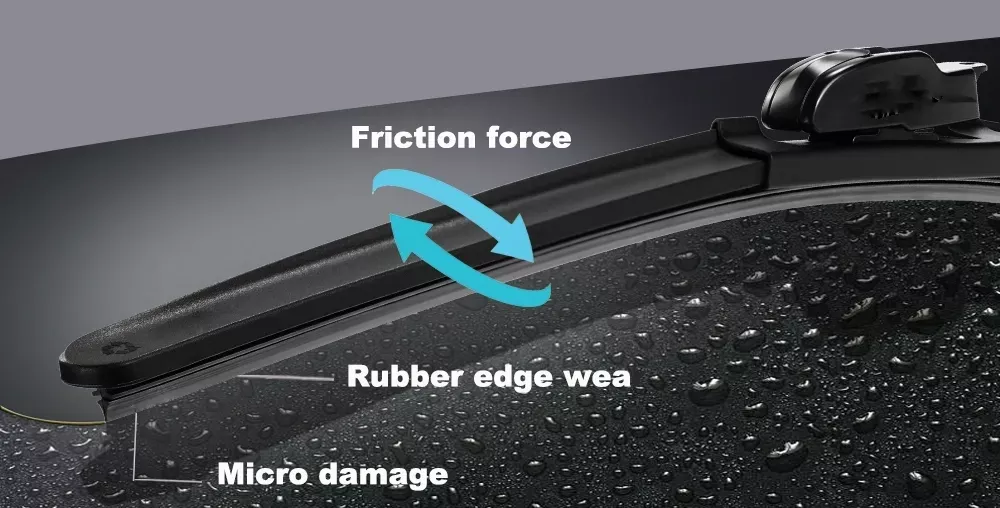
Most damage doesn’t come from weather alone. It comes from friction.
Every wipe creates contact. Every contact removes a tiny bit of rubber material.
You don’t notice it at first.
But after thousands of wiping cycles, the edge becomes uneven — and streaking begins.
Where Coating Starts to Make a Difference
This is usually where things shift in bulk procurement decisions.
Uncoated rubber → higher friction
Graphite coating → reduced friction
PTFE coating → significantly lower friction
Not exact lab values, but consistent trends we’ve seen in real testing.
Lower friction doesn’t stop wear completely — it slows it down.
For distributors comparing coating performance in bulk procurement, PTFE-coated wiper blades are often used to reduce friction and improve wiping consistency in aftermarket applications.
Learn more about our PTFE Coated Wiper Blades for wholesale and OEM supply.
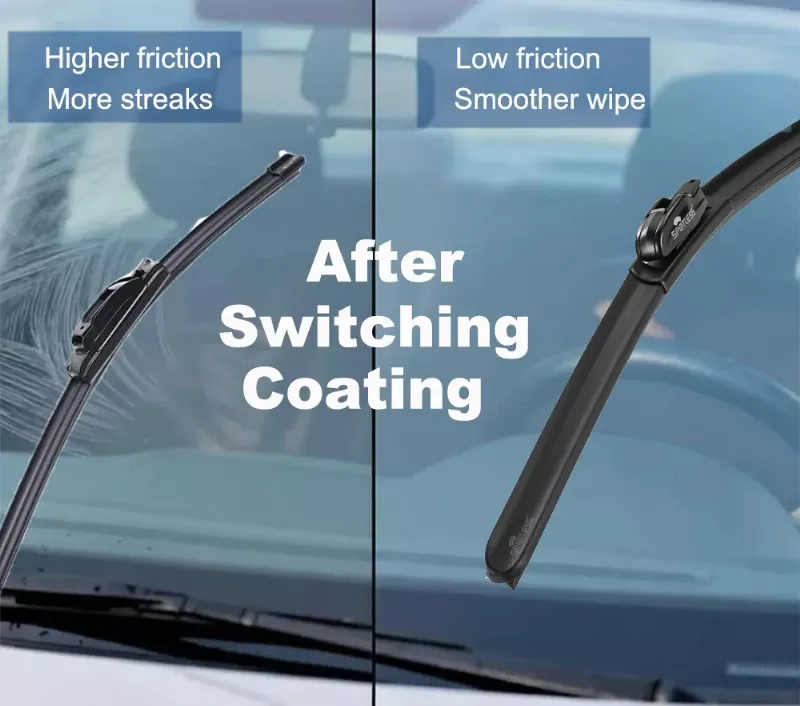
What We Observed After Switching to PTFE Coating
In some bulk orders, when customers switched to PTFE-coated wiper blades, we noticed a few patterns:
Fewer streaking complaints
Reduced noise issues
Slightly longer replacement cycles
We once tracked a batch of around 5,000 units in a humid Southeast Asian market.
After switching coating, return complaints dropped noticeably after a few months.
Not zero — but clearly better in real distribution feedback.
These observations come from long-term aftermarket supply experience and real distributor feedback across multiple export markets.
You can learn more about our windshield wiper manufacturing and testing process.
Not Every Coated Blade Performs the Same
Coating is not a guarantee.
We’ve seen coated products where performance dropped quickly after short use.
Once the coating wears off, the advantage disappears.
So when someone says coating doesn’t work, we usually ask:
What type of coating was actually used?
If You’re Dealing With Returns, This Is Worth Checking
If your customers are reporting:
Wiper streaking
Noise after short use
Incomplete cleaning
It doesn’t always mean the product needs to change.
Sometimes it’s friction and wear showing up earlier than expected.
Many distributors dealing with these issues are also reviewing broader aftermarket return patterns and fitment-related complaints.
You can also refer to: Common Wiper Blade Problems (Based on Real Distributor Feedback & Returns)
If You Want to Test It in Your Market
If you're comparing different wiper blade supplier options, testing side by side usually gives clearer answers than specifications.
Try a small batch. Run it across your main vehicle types.
That’s usually where the real difference shows up.
If you want, you can share your vehicle range or usage conditions. We can help prepare sample combinations before bulk orders.
For sample testing or technical comparison support:
Email: enquiry@xmyujin.com
If you are evaluating different suppliers, it is usually better to test before scaling bulk procurement.