

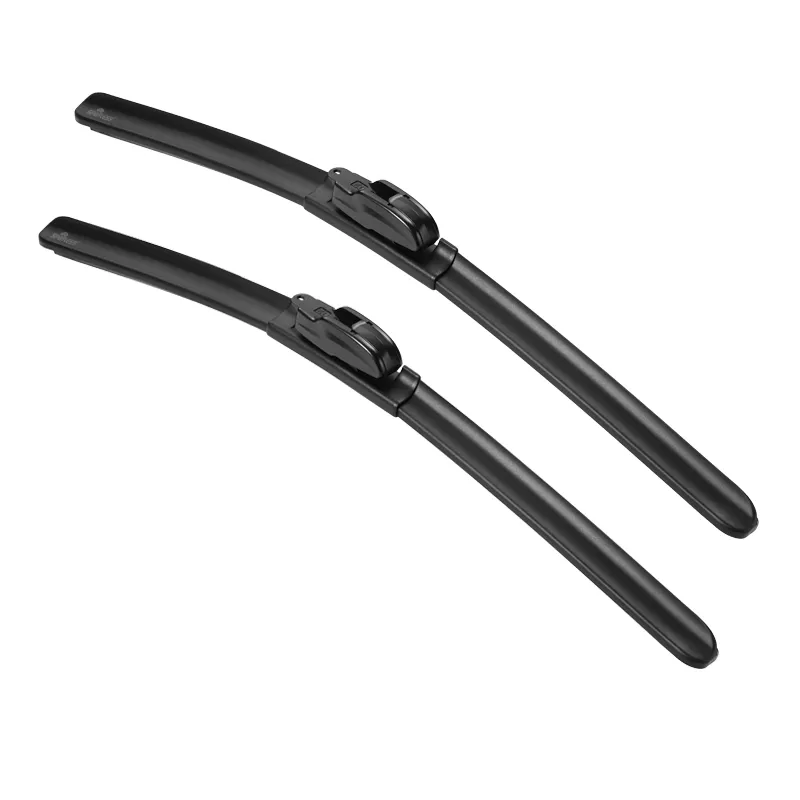
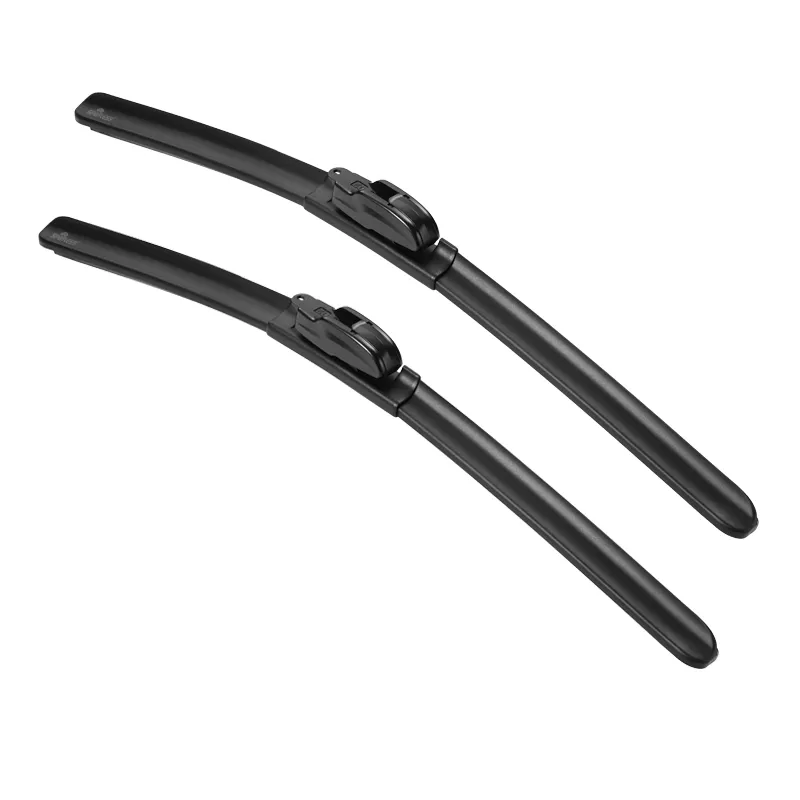


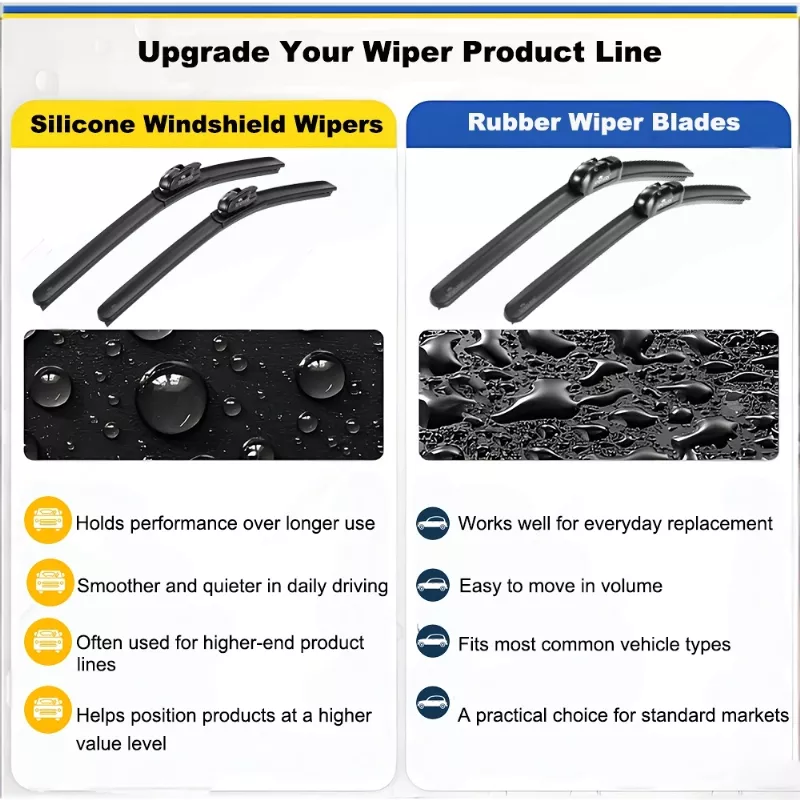
In many markets, silicone windshield wipers are no longer just an upgrade option—they are becoming a positioning choice for distributors who want higher-value product lines.
Compared with standard rubber blades, they are usually selected when buyers are looking for a longer lifecycle and a more stable end-user experience.
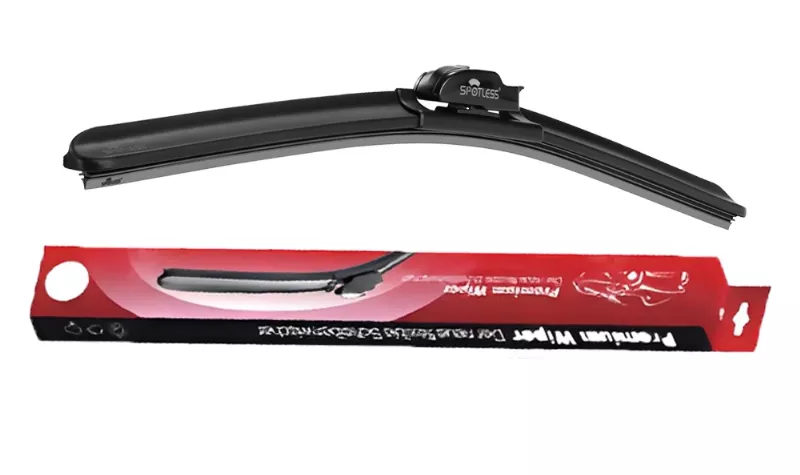
In real aftermarket sourcing, the decision is rarely just about material.
Most buyers consider how a product performs over time in their own market conditions. If you're still comparing materials, you can also check our silicone vs rubber comparison guide.
Customers expect longer replacement cycles
Climate conditions are more extreme
The product line needs a premium tier
It is less about replacing rubber completely and more about adding a higher-positioned option in the portfolio.
Silicone behaves differently once installed on the windshield.
Instead of only wiping water, it tends to leave a smoother glass surface after repeated use.
More stable wiping over time
Less noise during operation
Better consistency in rain conditions
This is especially noticeable in high-frequency driving environments.
One of the characteristics of silicone windshield wipers is how they interact with the glass surface.
Over time, a light hydrophobic effect can appear on the windshield, which helps water disperse more easily at driving speed.
This does not eliminate rain, but it improves visibility consistency during continuous driving conditions.
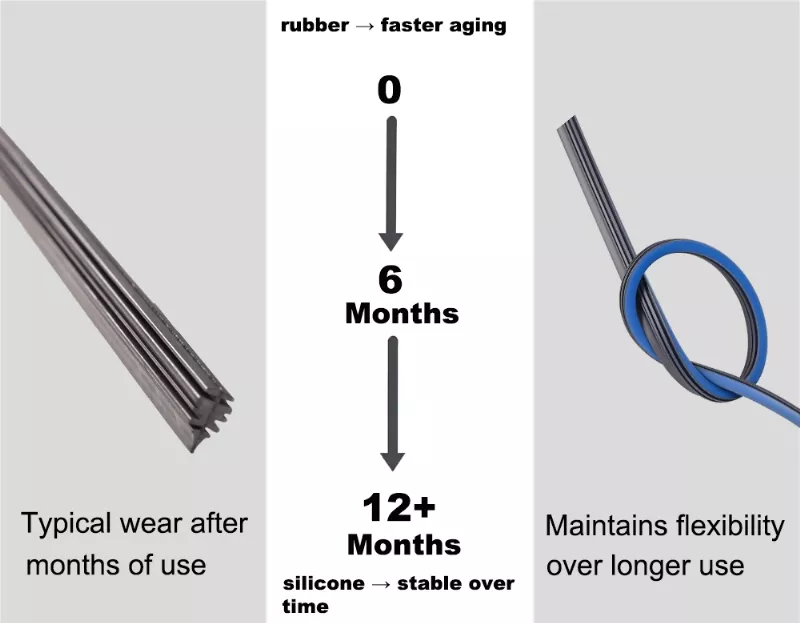
| Item | Rubber Wipers | Silicone Windshield Wipers |
|---|---|---|
| Market Position | Standard replacement | Premium upgrade |
| Lifespan | Regular cycle | Longer usage cycle |
| Noise Level | Moderate | Lower |
| Target Buyers | Mass aftermarket | Value-added segment |
If you're comparing options in more detail, you can also check our compare silicone vs rubber wiper blades for a clearer breakdown.
In many distribution channels, both products exist side by side rather than replacing each other.
From a sourcing perspective, silicone windshield wipers are often used in planned product portfolios rather than one-time replacement orders.
Expanding product categories
Building premium SKU lines
Entering higher-value market segments
This makes them more suitable for structured procurement planning.
For more price-sensitive markets or high-volume replacement needs, rubber wiper blades are still a practical alternative.
For distributors and brand owners, silicone windshield wipers offer more flexibility in positioning.
Private label packaging
Logo customization
Color and packaging variations
This allows buyers to build a clearer product identity in their local market.
In most cases, yes. The lifespan is generally longer, but actual performance depends on climate and usage frequency.
Yes. They are commonly used in both hot and cold regions, including high UV and low-temperature environments.
Yes, OEM and private label customization is available for bulk orders.
MOQ depends on packaging and customization requirements, usually higher than standard rubber products.
If you are planning to add a premium wiper line to your product range, we can help you check suitable sizes and market positioning first.
Just share your target market, and we’ll suggest options accordingly.
Request Suggestions
Are you facing unstable quality, high return rates, or too many SKUs?
We supply wiper blades and related accessories for distributors and private label brands.
Send us your requirements. We will reply within 24 hours.
Are you facing unstable quality, high return rates, or too many SKUs?
We supply wiper blades and related accessories for distributors and private label brands.
Send us your requirements. We will reply within 24 hours.

OEM wiper blade manufacturer since 2004,
Serving global distributors & private label brands.




Wiper Blade Reviews