

Wiper blades are one of those parts people don’t think about much—until they stop working properly.
For distributors, importers, and procurement teams, the decision is not just about material differences, but about sourcing strategy, market positioning, and long-term supply planning.
In most sourcing cases, the choice comes down to two product lines: silicone windshield wipers for premium positioning, and rubber wiper blades for high-volume procurement markets.
Silicone wiper blades are typically selected for long-term procurement programs and premium aftermarket sourcing, while rubber wiper blades are preferred for cost-sensitive, high-volume distribution channels.
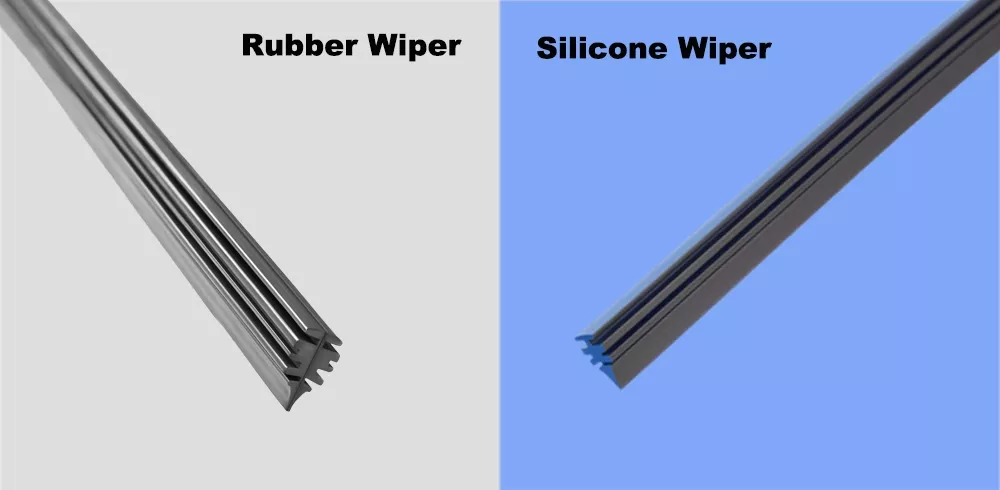
More buyers have started testing silicone blades, mainly because they hold up better over time in real market conditions.
Stay flexible in both hot and cold conditions
Less affected by UV and ozone exposure
Quieter wiping after repeated use
In some cases, drivers also notice that the glass feels smoother after continued use, especially during rainy conditions.
For distributors, this usually means fewer complaints and a product that fits better into higher-value product lines and value-added sourcing portfolios.
Rubber blades are still widely used, especially in markets where price matters more than lifecycle performance.
Lower cost per unit
Easy to replace and widely available
Suitable for routine maintenance
They don’t last as long under strong sunlight or harsh conditions, but for many buyers, this fits a fast-turnover supply chain model focused on volume procurement and price competitiveness.
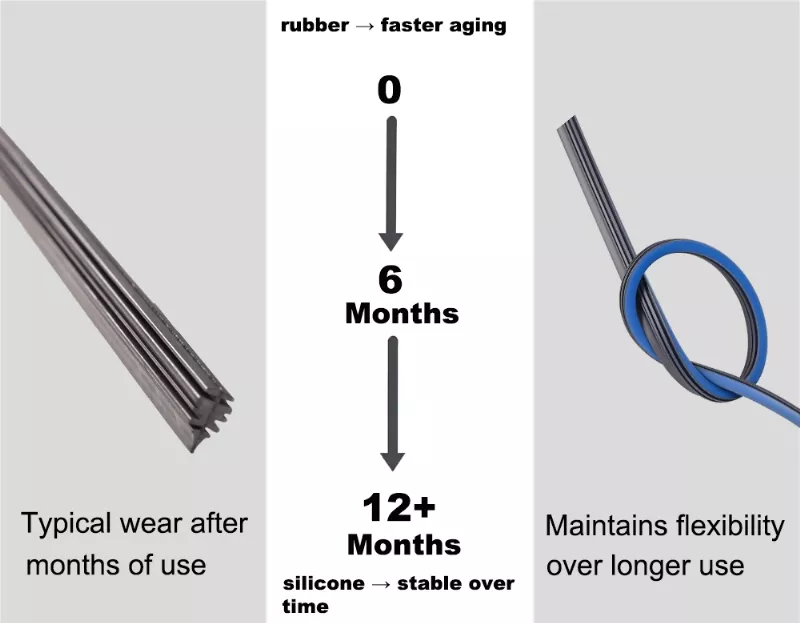
| Factor | Silicone | Rubber |
|---|---|---|
| Lifespan | Longer (12–24 months) | Standard (6–12 months) |
| Price | Higher | Lower |
| Performance Stability | More consistent | Varies over time |
| Market Position | Premium | High-volume |
If your market focuses on cost-driven sourcing, fast inventory turnover, and large-volume procurement, rubber blades are usually the more practical option.
If you're targeting premium aftermarket channels, OEM branding programs, or long-term distribution contracts, silicone options offer better lifecycle value.
In many cases, distributors don’t replace one with the other—they carry both product lines.
Rubber → faster turnover, lower entry cost
Silicone → higher margin, longer lifecycle
The mix depends on your procurement strategy, customer segmentation, and supply chain positioning.
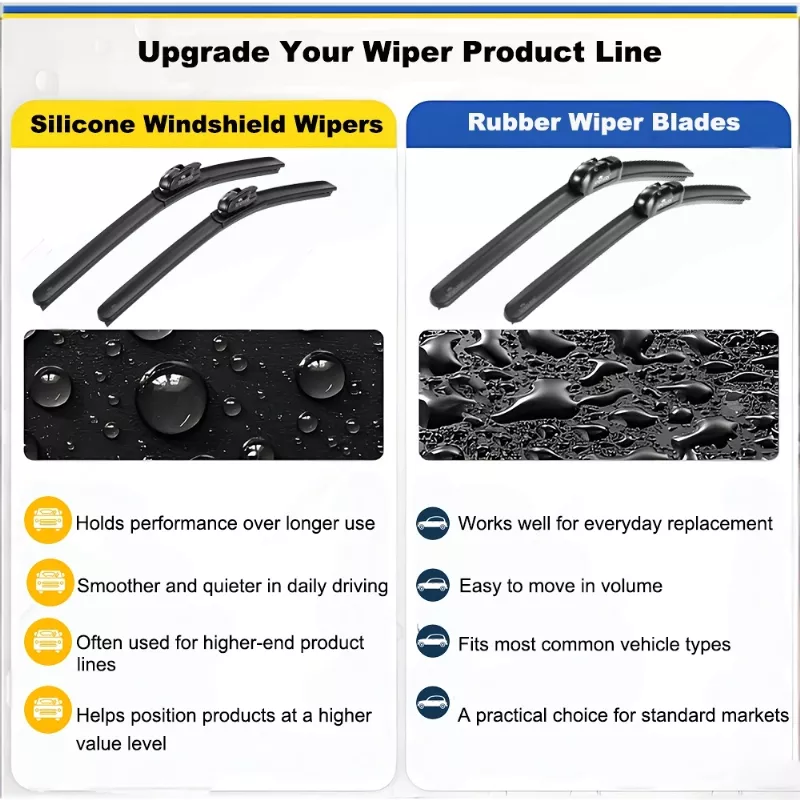
There is no single “better” option—only the right choice based on market demand, procurement strategy, and product positioning.
Some buyers start with rubber for volume, then expand into silicone as a higher-tier product line once demand stabilizes.
Others go directly into silicone when targeting premium customers or OEM programs from the beginning.
Still evaluating sourcing options for your market?
→ View Rubber Wiper Blades (Volume Supply)
→ View Silicone Windshield Wipers (Premium Line)