


Brand vs Coating — What Matters When Choosing Wiper Blades for Your Market
May 11, 2026In aftermarket wiper blade distribution, performance is often determined more by rubber quality and coating stability than by branding alone.
Many distributors discover that streaking, noise, and early wear are more closely related to friction control and fitment consistency than logo recognition.
Why Many Distributors Trust Brands by Default
Here’s a conversation we’ve had more times than we can count in aftermarket supply:
“We only stock well-known brands — customers trust them.”
Makes sense.
It feels safer. Easier to explain.
But a few months later, the same distributor often comes back with complaints.
Streaking. Noise. Early replacements.
So we started asking:
If a brand guarantees quality, why do these issues still appear in real wiper blade distribution?
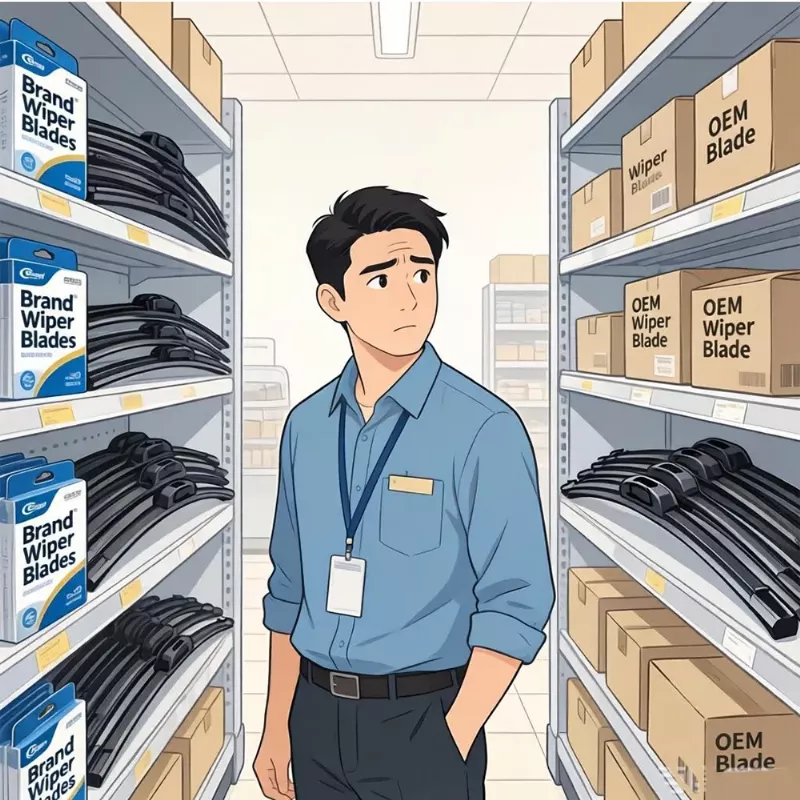
What Brand Actually Does — and Doesn’t Do
End users can’t see what’s happening at the rubber edge.
They don’t measure friction. They don’t check materials.
So the brand becomes a shortcut in decision-making.
For distributors too, it reduces pressure — you rely on reputation instead of technical evaluation.
That’s understandable.
But it also means performance differences are sometimes overlooked in windshield wiper blade sourcing.
Performance Doesn’t Come From the Logo
From what we’ve seen in real bulk orders, performance rarely comes from branding itself.
It comes from what’s inside the blade.
Mostly:
Rubber compound
Surface coating
Two products can look identical — even come from similar production setups — but behave differently after months of use.
What Really Affects Wiper Blade Performance
In most windshield wiper blade performance cases, it comes down to two things:
Rubber (aging and heat resistance)
Coating (friction control during wiping)
These two factors usually determine when streaking, noise, or uneven wiping starts to appear.
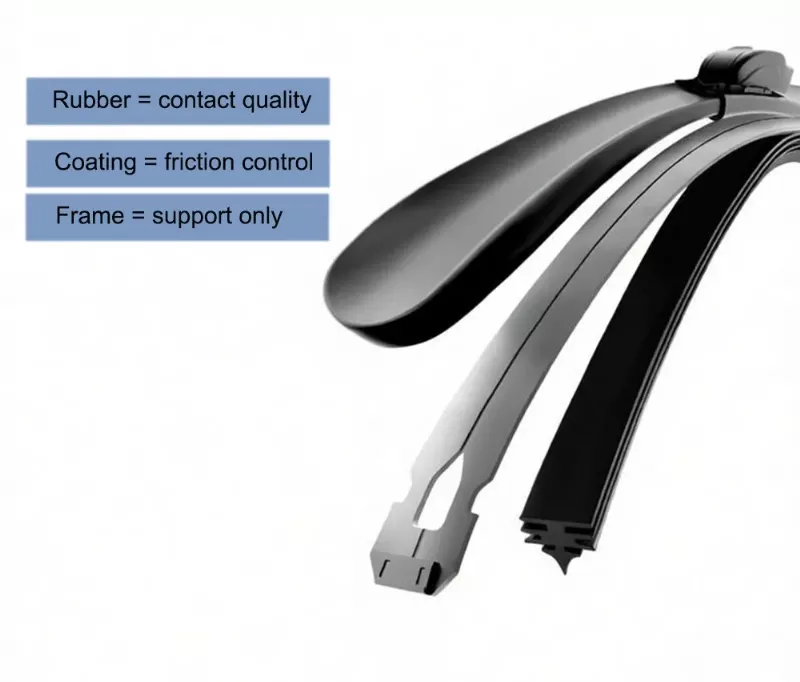
In many aftermarket cases, streaking and noise issues are more closely related to rubber wear and friction than branding itself.
You can also read: Why Wiper Blades Start Streaking — A Practical Guide for Distributors & Bulk Buyers
Why Coating Matters More Than Most Expect
Different coating types behave differently in real use:
No coating → higher friction, faster wear
Graphite → moderate performance
PTFE → lower friction, more stable wiping
These are not exact numbers, but reflect typical market testing trends.
Lower friction usually means less wear and fewer complaints over time.
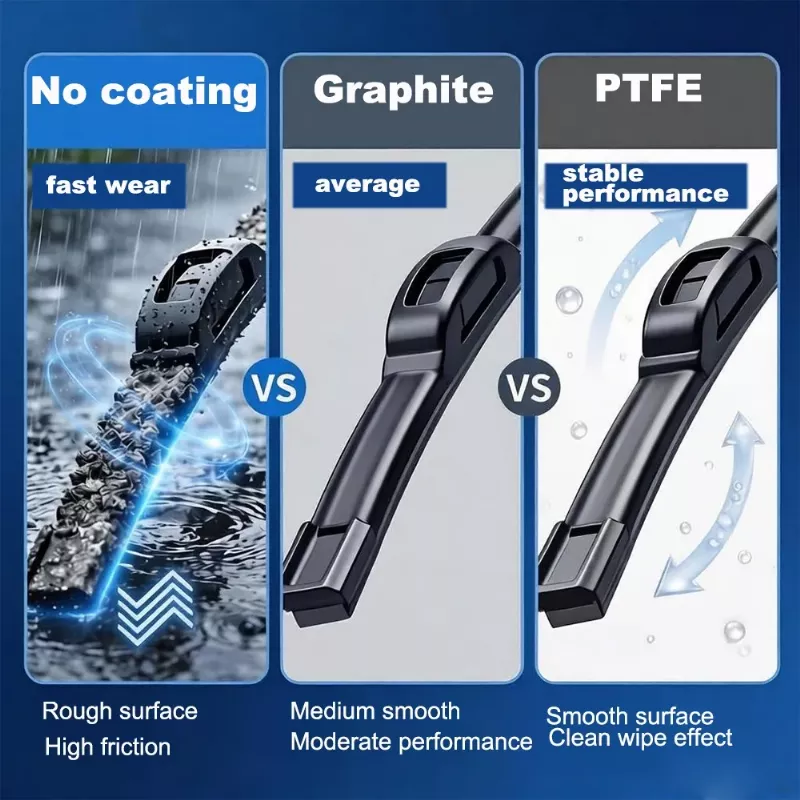
For distributors comparing coating stability and long-term wiping consistency, PTFE-coated wiper blades are commonly used in aftermarket wholesale programs.
Learn more about our PTFE Coated Wiper Blades for OEM and bulk supply.
Why PTFE Tends to Be More Consistent
We wouldn’t say PTFE coating is the only solution.
But from what we’ve seen in aftermarket markets, it tends to perform more consistently.
Especially in:
High-frequency usage markets
Hot and humid regions
Mixed weather environments
We’ve seen distributors switch part of their range to PTFE-coated blades and report more stable feedback after a few months.
These observations are based on long-term aftermarket supply experience and feedback from multiple export markets.
Learn more about our windshield wiper manufacturing and quality testing process.
When “PTFE Doesn’t Work” Is Usually a Misunderstanding
We’ve heard this argument many times in supplier discussions.
Some low-cost products claim coating, but don’t maintain it well.
Once the coating wears off, performance drops quickly.
So when someone says PTFE doesn’t make a difference, it’s often because the coating was not stable in the first place.
In many cases, coating-related misunderstandings are connected with broader aftermarket issues such as streaking, noise, skipping, or fitment mismatch.
You can also read: Common Wiper Blade Problems (Based on Real Distributor Feedback & Returns)
How We Suggest Buyers Compare Suppliers
We don’t recommend relying only on specifications in wiper blade procurement.
What works better is simple:
Test samples side by side.
In real conditions, differences usually appear after some time, not immediately.
If You’re Comparing Options, Test Before Scaling
If you're comparing branded and non-branded wiper blades or different coating types, testing is usually more reliable than descriptions.
Try them on your main vehicle range under real conditions.
That’s where real performance differences become visible.
If you want, you can share your market or vehicle types. We can help prepare sample sets for comparison before bulk purchasing decisions.
For supplier comparison or sample testing support:
Email: enquiry@xmyujin.com
We usually recommend side-by-side testing before large-scale procurement decisions.